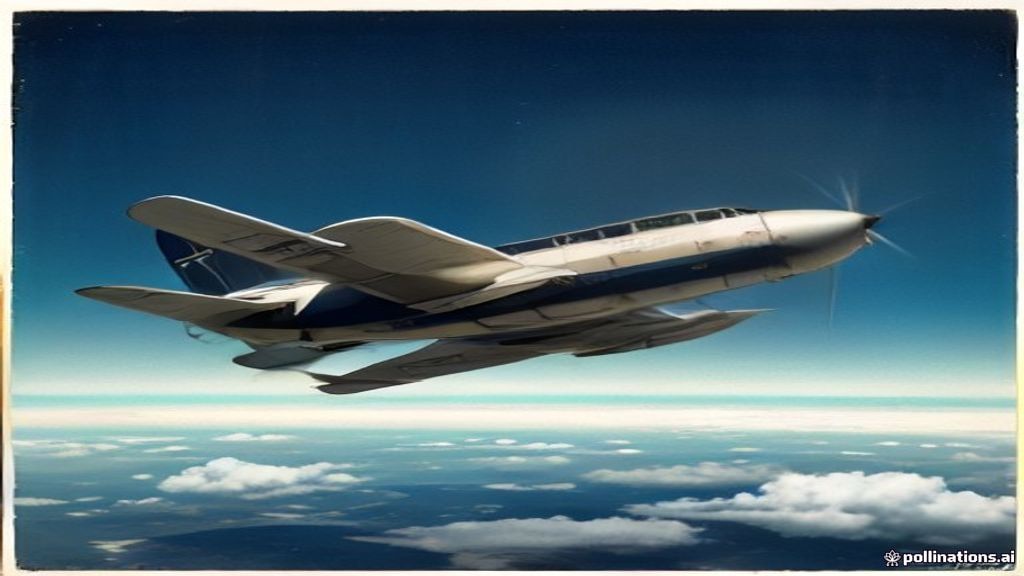
In the folklore of early aviation, few pioneers combined technical ingenuity, physical resilience, and fearless vision quite like Wiley Hardeman Post. Blind in his left eye from an oilfield drilling accident, the Oklahoma aviator conquered the skies through sheer instinctive mastery and scientific daring. Flying his beloved Lockheed Vega monoplane, the Winnie Mae, Post set two around-the-world flight records (including the first solo circumnavigation in 1933). Yet his greatest contribution to aerospace science came in 1934, when he climbed into the uncharted freezing realm of the stratosphere, discovering the jet stream and inventing the world’s first practical pressurized flight suit — the direct ancestor of modern space suits.
Executive Takeaway: Wiley Post’s Stratospheric Breakthrough
Wiley Post proved that flying in the stratosphere (above 40,000 feet) offered vast speed and fuel benefits, riding the high-altitude ‘jet stream’ at over 340 mph. In 1934, in partnership with B.F. Goodrich, Post designed the world’s first operational full-pressure flight suit, establishing the foundational life-support principles that carried humanity into the Space Age.
The Winnie Mae and the Around-the-World Triumphs
Wiley Post’s rise to international acclaim was forged through endurance record-setting. In 1931, Post and Australian navigator Harold Gatty flew the Winnie Mae — a standard high-wing, all-wood Lockheed 5C Vega powered by a Pratt & Whitney Wasp radial — around the northern hemisphere in 8 days, 15 hours, and 51 minutes, shattering the previous record held by the Graf Zeppelin.
Two years later, in July 1933, Post repeated the feat entirely alone. To survive the grueling 15,596-mile solo flight without sleep, Post utilized an experimental Sperry pneumatic three-axis autopilot and an automatic radio direction finder. He completed the solo circumnavigation in 7 days, 18 hours, and 49 minutes, becoming the first human being to fly around the planet solo. Having conquered global distance and speed, Post turned his gaze upward toward the ultimate frontier: altitude.
| Metric / Dimension | Lockheed Vega 5C “Winnie Mae” (High-Altitude Mod) |
|---|---|
| Airframe Construction | Molded Monocoque Plywood Fuselage with Spruce Wing |
| Powerplant | Pratt & Whitney Wasp R-1340 Radial (Supercharged) |
| Supercharging Architecture | Two-Stage Centrifugal Supercharger (Mechanical) |
| Landing Gear Modification | Jettisonable Wheels (Belly-Skid Landing for Drag Reduction) |
| Maximum Reached Altitude | Approximately 50,000 ft (15,240 m) |
| Maximum High-Altitude Ground Speed | 340+ mph (547 km/h) – Riding the Jet Stream |
| Pilot Life Support | B.F. Goodrich Mark III Rubberized Full-Pressure Suit |
The Deadly Challenge of the Stratosphere
By 1934, Post recognized that civilian airliners were severely restricted by operating in the turbulent troposphere below 20,000 feet. In the thin air of the stratosphere (above 35,000 feet), air density drops to a fraction of sea level. If an engine could be supplied with compressed air, an aircraft could fly through this thin atmosphere encountering virtually zero aerodynamic drag, slashing fuel consumption and achieving unprecedented transcontinental airspeeds.
However, the human body cannot survive at stratospheric altitudes without artificial protection:
- Hypoxia: At 40,000 feet, atmospheric pressure is so low that oxygen cannot pass through the alveolar walls of the lungs into the bloodstream, causing unconsciousness within seconds even when breathing 100% pure oxygen.
- Ebullism (Armstrong’s Limit): At altitudes exceeding 63,000 feet, the ambient atmospheric pressure drops below the vapor pressure of water at human body temperature (37°C / 98.6°F), causing bodily fluids, saliva, and tears to boil away at body temperature.
Because the wooden monocoque fuselage of the Winnie Mae was structurally incapable of holding internal air pressure without bursting, Post concluded that he must pressurize the pilot rather than the cabin. He needed a wearable, hermetically sealed pressure capsule — a personal space suit.
Inventing the World’s First Pressure Suit
Post approached the B.F. Goodrich Company in Akron, Ohio, and collaborated with mechanical engineer Russell S. Colley. Constructing a functional full-pressure suit presented immense mechanical dilemmas: when inflated with gas to 5.5 psi, the suit naturally stiffened into a rigid, unbendable balloon, preventing the pilot from moving his arms, gripping the flight controls, or adjusting throttle levers.
After two failed prototypes tore under pressure tests, Colley and Post designed the historic Mark III Pressure Suit:
- Two-Layer Construction: An inner rubber bladder designed to maintain an airtight seal, surrounded by an outer layer of non-stretchable rubberized parachute fabric tailored to hold the human shape.
- Pre-Formed Seated Posture: The suit’s arms and legs were permanently molded into a bent, seated flying posture. When inflated to 5.5 psi, it rested naturally in the control position, requiring minimal muscular effort from Post to deflect the stick.
- The Aluminum Diver’s Helmet: A rigid, double-glazed aluminum helmet with a large circular viewing visor. The helmet included an electric heating filament between two glass panes to prevent frost formation in –60°F stratospheric temperatures.
- Liquid Oxygen Vaporizer: Pure oxygen was boiled off from a cryogenic container, providing breathable gas and pressurizing the suit interior to an equivalent altitude of 15,000 feet.
Riding the Jet Stream: Discovery of High-Altitude Winds
Clad in his futuristic white suit, looking like an otherworldly deep-sea diver, Wiley Post launched a series of high-altitude test flights over California and Oklahoma in late 1934 and early 1935. To maximize climb performance, Post had modified the Winnie Mae with a jettisonable landing gear; after takeoff, he released the wheels, flying clean and landing on a reinforced wooden skid bolted to the fuselage belly.
On multiple test ascents, Post climbed beyond 40,000 and eventually near 50,000 feet. In December 1934, flying between Burbank, California, and Cleveland, Ohio, Post observed a startling meteorological phenomenon. While his airspeed indicator registered barely 150 mph through the thin stratospheric air, his ground speed clocked at an astonishing 340 mph — far faster than the Winnie Mae was aerodynamically capable of flying under engine power alone.
Without realizing it at first, Wiley Post had discovered the Jet Stream — the high-velocity, eastward-flowing atmospheric rivers of wind circulating in the upper troposphere and lower stratosphere. He documented these massive wind currents meticulously, proving to the scientific world that commercial aircraft could harness high-altitude tailwinds to cut transcontinental travel times by half.
The Tragic Horizon and Everlasting Legacy
Tragically, Wiley Post’s brilliant life was cut short in August 1935. Exploring passenger and mail routes between Alaska and Siberia alongside his close friend, beloved American humorist Will Rogers, Post’s hybrid aircraft (a Lockheed Orion fitted with heavier Explorer floats) stalled on takeoff from a lagoon near Point Barrow, Alaska, killing both men instantly. The nation was plunged into deep mourning for two of its most cherished sons.
Yet Wiley Post’s technological contributions remain immortal. The pressure suit he developed with Russell Colley served as the direct technological archetype for the David Clark suits worn by Chuck Yeager in the Bell X-1, the high-altitude pressure suits worn by U-2 and SR-71 Blackbird spy plane pilots, and the iconic Apollo spacesuits that walked on the surface of the Moon. Today, the legendary Winnie Mae hangs proudly in the Smithsonian National Air and Space Museum, alongside Post’s Mark III pressure suit — the foundational artifact of human space exploration.